SendMyCall vs Big-Brand Virtual Phone Systems: What Global Businesses Should Consider
Posted on:
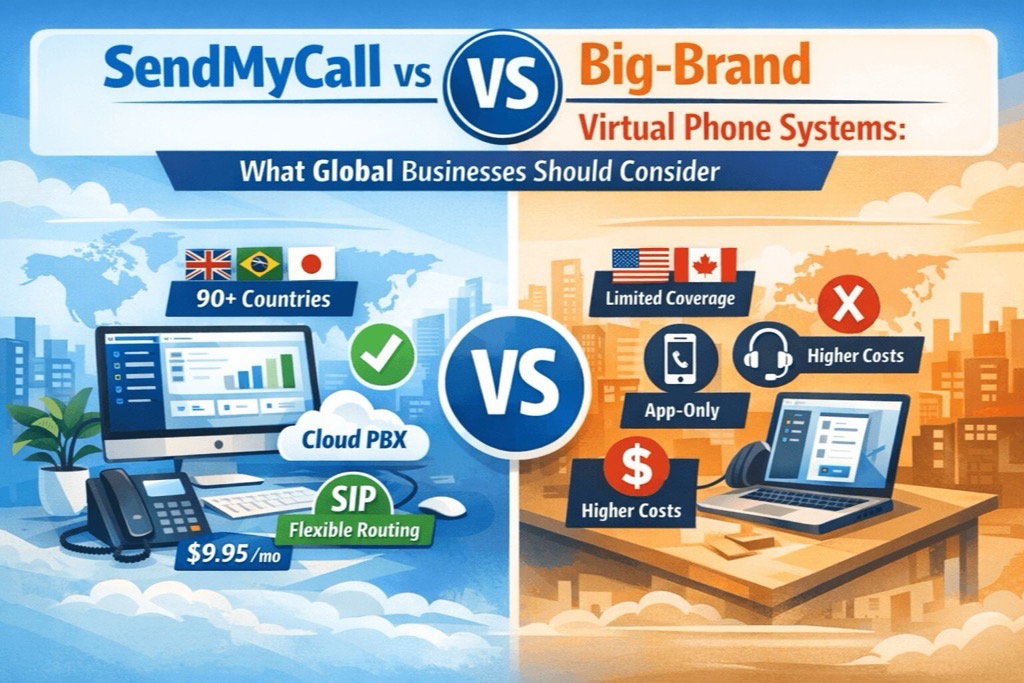
When businesses search for a virtual phone system, they often come across the same major providers first. Big-brand platforms are widely known, heavily advertised, and often positioned as the default choice for small businesses.
But that does not automatically make them the best fit for every company.
For businesses that need international coverage, flexible call routing, and better value, it is worth taking a closer look at what different providers actually offer — especially if your business serves customers in more than one country.
Brand Recognition Does Not Always Equal Global Flexibility
Many well-known virtual phone providers are designed primarily for domestic users or businesses focused on one market. That can work well if your company only needs a simple setup in one country.
However, businesses with broader needs often require more, such as:
• local numbers in multiple countries
• toll-free options for customer support
• routing to mobile, landline, SIP, or remote teams
• a professional cloud PBX without expensive add-ons
• the ability to manage several numbers from one platform
This is where the difference between a well-known provider and the right provider becomes more important.
What to Compare Before Choosing a Virtual Phone System
If your business is comparing providers, here are some of the most important areas to evaluate.
International Number Availability
One of the biggest differences between providers is the range of countries they support.
Some platforms are mainly focused on North America or a small group of markets. That may be enough for businesses operating locally, but it can be limiting for companies that want to establish a presence in several countries.
SendMyCall offers virtual phone numbers in 90+ countries, including local, national, mobile, and toll-free options. For businesses looking beyond one domestic market, that broader international reach can be a major advantage.
Flexibility in How Calls Are Handled
Some phone systems are built mainly around a proprietary app. That can be convenient in some cases, but other businesses need the freedom to handle calls in different ways.
For example, a growing company may want to send calls to:
• a mobile phone
• an office phone
• a landline
• a SIP device
• a softphone
• several team members at once
SendMyCall is built for that kind of flexibility, which can be especially useful for remote teams and businesses with distributed staff.
Included Business Phone Features
A business number is only part of the picture. Many companies also need a professional phone system to manage inbound calls efficiently.
Features that matter often include:
• IVR voice menus
• call forwarding
• ring groups
• voicemail to email
• time-based routing
• call recording
• call logs and reporting
SendMyCall includes a free fully featured cloud PBX, helping businesses create a more professional caller experience without needing separate hardware or another monthly subscription.
Cost and Scalability
Pricing is another key point of comparison. Some business phone systems become more expensive as more users, features, or locations are added.
For startups, small businesses, and growing teams, this can make a big difference over time.
SendMyCall offers virtual numbers starting at $9.95 per month, making it an appealing option for businesses that want professional features without a high entry cost.
Direct Comparison: SendMyCall vs. The Industry Giants
| Feature | Legacy Providers (Grasshopper/etc) | App-Based (OpenPhone/etc) | SendMyCall |
| Starting Price | $28 – $50+ /mo | $15 – $30+ /mo | $9.95 /mo |
| Global Reach | Mostly US/Canada | Limited International | 90+ Countries |
| Cloud PBX | Basic | App-Dependent | Free & Fully Featured |
Where SendMyCall Stands Out
Big-brand providers may be a good fit for businesses that only need a basic local setup or prefer to stay within one app ecosystem.
SendMyCall stands out most for businesses that want:
• a local presence in multiple countries
• flexible routing beyond one app
• SIP compatibility
• a free cloud PBX included
• lower starting costs
• support for international growth
That makes it a strong option for companies that need more than a simple domestic business line.
Why Global Businesses Often Need a Different Kind of Provider
A company serving customers in one city may only need a basic number and voicemail. But a company working across regions or countries usually has different priorities.
For example, global businesses often need to:
• appear local in more than one market
• route calls across time zones
• manage several numbers from one account
• support remote or hybrid teams
• maintain a professional image without opening physical offices everywhere
In those situations, international number access and flexible call handling become much more valuable than brand name alone.
A Local Presence Still Matters
No matter how digital business becomes, local trust is still important.
Customers are often more comfortable answering or returning calls from a familiar area code or country code. A local number can help your business feel more established, more reachable, and more relevant to the customer.
That is one reason many businesses use SendMyCall to create a local presence in markets where they do not have a physical office.
Conclusion
The right virtual phone system depends on what your business is trying to accomplish.
If your needs are simple and local, a mainstream provider may be enough. But if your business needs international virtual numbers, flexible routing, SIP compatibility, and a professional cloud PBX at an affordable price, SendMyCall is well worth considering.
For businesses thinking beyond one country or one app, the best choice is often not the biggest brand — but the provider that offers the right tools for real-world growth.