How Business Phone Systems Have Changed in the Last 10 Years
Posted on:
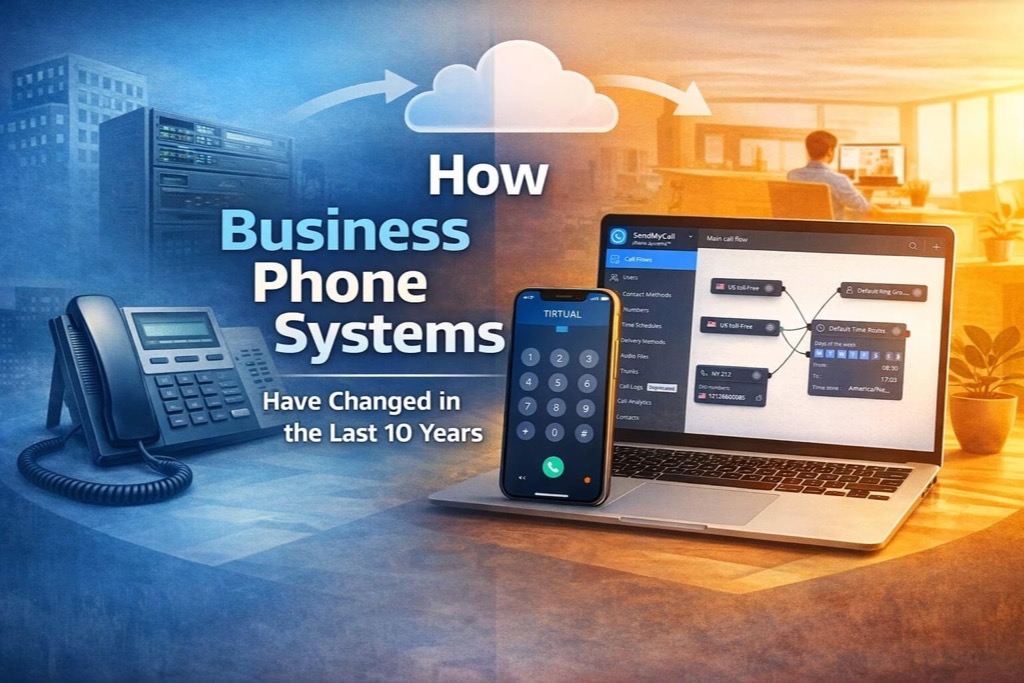
Business phone systems have evolved dramatically over the past decade. What once required expensive hardware, physical offices, and complex setups has shifted toward flexible, cloud-based solutions designed for modern businesses.
Understanding how business phone systems have changed helps companies choose the right tools for today — and prepare for future growth.
From Hardware-Based Systems to the Cloud
Ten years ago, most businesses relied on on-premise PBX systems. These required:
-
Physical phone hardware
-
Dedicated wiring
-
Ongoing maintenance
-
Costly upgrades
Today, cloud-based PBX systems have largely replaced traditional setups. Instead of hardware, businesses manage calls through online dashboards and apps, eliminating the need for physical infrastructure.
Cloud PBX systems are easier to deploy, scale, and maintain — making them ideal for businesses of all sizes.
The Rise of Virtual Phone Numbers
In the past, phone numbers were tied to physical locations. If a business moved or expanded, it often needed new phone lines and contracts.
Modern business phone systems use virtual numbers, allowing companies to:
-
Operate in multiple cities or countries
-
Maintain a local presence without physical offices
-
Route calls anywhere in the world
Virtual numbers make businesses more accessible while reducing geographic limitations.
Mobile and Remote Work Became the Standard
A decade ago, business calls were answered primarily at desks. Today, work happens everywhere.
Modern phone systems support:
-
Remote teams
-
Hybrid work environments
-
Employees in different time zones
With mobile and desktop apps, users can make and receive business calls from anywhere, without relying on desk phones or office locations.
Unified Communication in One Platform
Previously, businesses often used separate tools for:
-
Desk phones
-
Mobile phones
-
Voicemail
-
Call forwarding
Today’s systems bring everything together in one place. A single platform can manage:
-
Internal and external calls
-
Call transfers and conferences
-
Voicemail access
-
Call history and analytics
This unified approach simplifies communication and improves productivity.
Greater Focus on Customer Experience
Modern business phone systems prioritize customer experience more than ever.
Features such as:
-
Auto-attendants
-
Call routing
-
Music on hold
-
Voicemail-to-email
help ensure callers are handled professionally and efficiently, even during high call volumes or outside business hours.
Lower Costs and Better Scalability
Traditional phone systems were expensive to install and difficult to scale.
Cloud-based systems offer:
-
Predictable monthly pricing
-
No long-term contracts
-
Easy user and number management
-
Flexible scaling as businesses grow
This allows businesses to control costs while adapting quickly to changing needs.
Security, Reliability, and Business Continuity
Modern phone systems are built with reliability in mind.
Cloud platforms provide:
-
Redundant infrastructure
-
Secure call handling
-
Continuity during office disruptions
-
Access from multiple devices
This helps businesses stay connected even during unexpected events.
How SendMyCall Fits the Modern Business Phone Model
SendMyCall reflects how business phone systems have evolved.
With SendMyCall, businesses can:
-
Use local, toll-free, and international virtual numbers
-
Manage calls through a cloud PBX
-
Route calls globally
-
Use one app across desktop, mobile, and web
-
Operate without hardware or long-term contracts
Modern communication tools help businesses stay flexible, professional, and competitive.
Final Thoughts
Business phone systems are no longer tied to desks, offices, or physical hardware. They’ve become cloud-based, mobile-friendly, and globally accessible.
Choosing a modern phone system isn’t just about making calls — it’s about supporting how businesses work today and preparing for what comes next.