Customer Service vs. Customer Support: What’s the Difference—and Why It Matters for Your Business
Posted on:
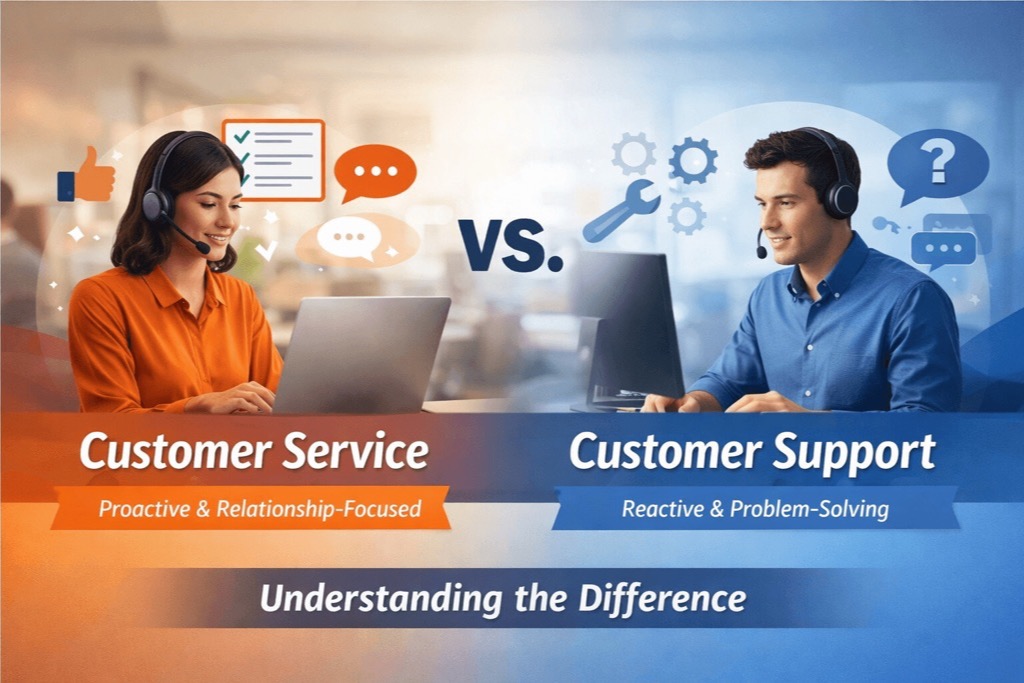
The terms customer service and customer support are often used interchangeably. But they are not the same—and confusing them can quietly hurt your customer experience, retention, and growth.
Understanding the difference helps businesses design better communication workflows, set the right expectations, and choose the right tools to support customers at every stage of the relationship.
What Is Customer Support?
Customer support is reactive and problem-focused.
It exists to help customers when something goes wrong or when they need technical assistance. Support teams typically step in after a customer encounters an issue.
Common customer support activities:
-
Troubleshooting technical problems
-
Answering “how do I…” questions
-
Resolving outages or service disruptions
-
Fixing account or billing issues
Customer support is essential—but it’s only one piece of the customer experience.
What Is Customer Service?
Customer service is proactive and relationship-focused.
It spans the entire customer journey—from the first interaction to long-term loyalty. Customer service isn’t just about solving problems; it’s about how customers feel when interacting with your business.
Common customer service activities:
-
Guiding new customers during onboarding
-
Handling inquiries before problems occur
-
Providing fast, friendly responses
-
Creating positive, consistent communication experiences
Customer service shapes trust. Customer support maintains functionality.
The Key Difference
| Customer Support | Customer Service |
|---|---|
| Reactive | Proactive |
| Problem-solving | Relationship-building |
| Triggered by issues | Present at every stage |
| Technical focus | Experience focus |
Businesses that rely only on customer support often miss opportunities to build loyalty before issues arise.
Why This Difference Matters More Than Ever
Today’s customers expect:
-
Fast responses
-
Clear communication
-
Consistent experiences across channels
If your systems only activate after something breaks, customers feel ignored—even if the issue is eventually fixed.
Strong customer service prevents frustration. Strong customer support resolves it.
The best businesses invest in both.
How Your Phone System Impacts Service and Support
Your business phone system plays a critical role in both areas.
-
Missed calls hurt customer service
-
Long wait times damage trust
-
Poor call routing frustrates support teams
-
Inconsistent availability leads to lost customers
Modern businesses need tools that support proactive service and responsive support—without adding complexity.
Bridging the Gap with Smarter Communication
With a cloud-based phone system like SendMyCall, businesses can design call flows that support both customer service and customer support:
-
Route sales and service calls differently
-
Use IVR menus to guide callers efficiently
-
Forward calls based on time, team, or priority
-
Ensure no call goes unanswered—even after hours
The result? Customers feel heard before there’s a problem—and supported quickly when one arises.
Final Thoughts
Customer support fixes problems.
Customer service builds relationships.
Businesses that understand—and invest in both—don’t just retain customers. They earn loyalty.
If your communication systems only address issues after they happen, it may be time to rethink how you connect with your customers.
Want to turn every call into a better customer experience?
A flexible business phone system can make the difference between reactive support and proactive service.